01 / Cover story
- Small money needs low friction
- The growth shift: automation meets actual work
Five years will pass anyway. You could spend them chasing the next big thing—or learning to put a little money to work, month after month.
You don’t need to be rich to begin. Start with what fits your life. Investing has risks and returns are never guaranteed.
Keep investing broad, follow the shift toward real-world automation, and test a useful service before paying for tools.
Education, not advice. Investing has risks; returns are never guaranteed.
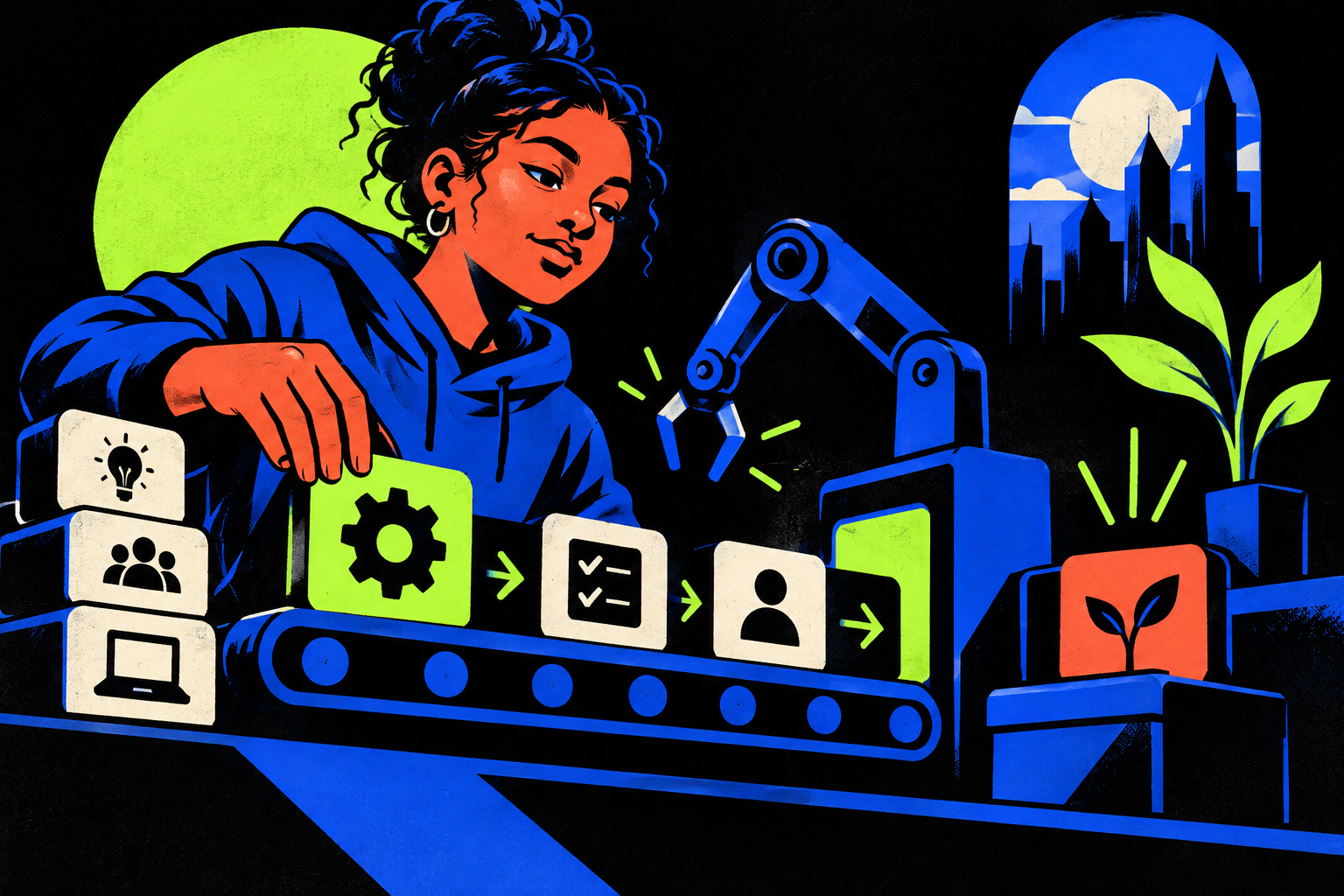
Keep investing broad, follow the shift toward real-world automation, and test a useful service before paying for tools.
Understand it first.
Plain-language research, real sources, and the risks right beside the opportunity.
Make room for your real life.
$10 to $50 a month is a starting point, not a rule. Never invest money you need for essentials.
Think in years, not overnight wins.
No secret picks. No guaranteed outcome. Just a more useful way to make decisions.